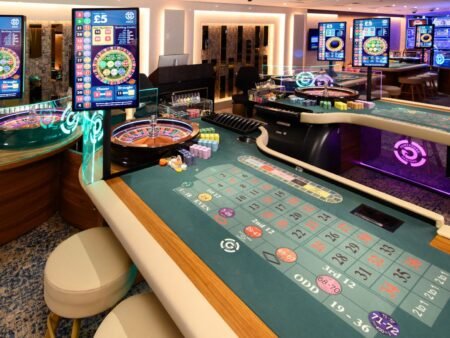
The regulatory oversight of Great Britain’s land-based and digital machine gaming sectors has reached a pivotal juncture. The UK Gambling Commission (UKGC) has formally enacted updated Gaming Machine Technical Standards alongside an overhauled Gaming Machine Testing Strategy. These regulatory measures apply across all machine categories—from Category A, B1, B2, B3, and B4 down to Category C and D machines operating within land-based casinos, bingo halls, adult gaming centres (AGCs), and licensed family entertainment venues.
Designed to eliminate high-velocity game mechanics, mandate real-time session visibility, enforce automated staff interaction alerts, and harmonise physical terminal performance with remote gambling software technical standards (RTS), these technical rules represent a comprehensive software and hardware redesign for the UK market.
This technical review delivers an in-depth, section-by-section breakdown of the updated engineering requirements, mandatory limit-setting protocols, staff alert mechanisms, testing frameworks, and practical compliance workflows for gaming machine manufacturers and venue operators.
SECTION 1: Strategic Regulatory Context & Implementation Timelines
The Gambling Commission’s consultation updates and statutory amendments establish a clear roadmap for compliance. Rather than relying solely on post-hoc supervisory interventions, the UKGC has embedded safer gambling controls directly into the machine architecture and operational source code.
Regulatory Implementation Milestones
- 30 September 2026: Official publication of the final Gaming Machine Technical Standards and updated testing strategy documentation.
- 30 March 2027: Interim technical standards for gaming machine session tracking and real-time displays take mandatory effect.
- 30 June 2027: Full implementation of updated Gaming Machine Technical Standards and mandatory testing strategy across all machine categories.
- 3 October 2028: Mandatory enforcement of amended LCCP SR Code 3.3.3 regarding staff alerts for limit-setting thresholds under Section 15.1.
The Dual Objective: Friction-Free Design vs. Active Consumer Protection
Historically, gaming machines in land-based environments operated with localized session tracking that lacked real-time integration with venue management platforms. The updated standards bridge this technical divide. By synchronising physical terminal displays with centralized backend databases, the Commission aims to reduce continuous, unmonitored play, eliminate misleading outcome representations, and enforce timely staff interventions before severe financial distress occurs.
SECTION 2: Core Engineering Requirements & Technical Game Architecture
The updated standards require structural modifications to game design, display mechanics, outcome reporting, and transaction handling across physical terminals and networked server systems.
Core Technical Pillars
- Display Mechanics: Clear net win/loss presentation, total elimination of misleading audio on sub-stake wins, and prohibition of rapid cycle play.
- Session Time & Loss Velocity: Mandatory 60-minute automated session summaries, forced pause prompts, and strict velocity limits.
- Limit Setting & Real-Time Alerts: Voluntary and mandatory financial caps integrated directly with real-time floor staff alert systems.
1. Game Pace, Cycle Duration, and Autoplay Prohibitions
To address the psychological harm associated with high-frequency reel spins, the updated standards enforce strict timing parameters across all reel-based and video-based gaming machine cycles, including modern digital formats and thematic animal slot games:
- Minimum Game Cycle Duration: Standard game cycles must maintain a minimum duration (e.g., 2.5 seconds for remote/digital slot environments, with aligned land-based terminal pacing depending on machine category). A game cycle begins when a player initiates the spin or wager and ends when all visual and auditory outcome indicators have fully ceased.
- Prohibition of Speed-Up Features: Software features that allow players to skip animations, accelerate reel stops, or compress the cycle duration (“turbo mode” or “slam stop”) are strictly banned.
- Complete Autoplay Removal: Autoplay functionality is completely prohibited across Category B, C, and D gaming terminals. Every game cycle requires a manual, conscious physical or touch-screen interaction from the player.
2. Transparent Outcome Displays and Auditory Rules
Visual and auditory feedback must reflect the true financial reality of every game outcome:
- Elimination of Losses Disguised as Wins (LDWs): When a player receives a payout that is less than or equal to the total stake placed for that individual cycle (e.g., wagering £2.00 and winning £0.50), the terminal must not trigger celebratory sound effects, flashing graphics, or winning fanfare.
- Net Position Display: Terminals must continuously display the player’s total net session position (total deposits minus total wagers plus total winnings) in prominent, un-obscured typography on the primary gaming screen.
- Prohibition of “Near-Miss” Manipulation: Game engine code must execute true Random Number Generator (RNG) distributions. Visual representations on non-winning reels must not artificially alter symbol positioning to simulate a near-miss scenario (e.g., stopping a jackpot symbol one pixel above the payline more frequently than mathematical probability dictates).
SECTION 3: Session Tracking, Forced Interruption, and Limit Setting (Section 15.1)
Section 15.1 of the updated technical standards establishes technical rules for mandatory session tracking, limit setting, and real-time alert generation.
Legacy Terminal Environment vs. Updated UKGC Standard (Section 15.1)
- Session Timing: Legacy environments relied on passive time displays in screen corners. Updated standards mandate active 60-minute session pop-up windows detailing full financial activity.
- Limit Setting Infrastructure: Legacy machines lacked mandatory monetary limit-setting features, often complicating reload bonus promotions and promotional wagering. Updated standards require explicit prompt screens for setting deposit and loss caps prior to play.
- Continuity Controls: Continuous unmonitored play is replaced by forced session pauses that require active player interaction before games can resume.
- Telemetry & Floor Integration: Isolated terminal operations are replaced by networked telemetry feeding real-time data directly to venue staff dashboards and handheld devices.
1. Mandatory Session Interruption & Time-Elapsed Alerts
When a customer engages in a continuous session on a gaming machine, the updated software architecture mandates active interruptions:
- 60-Minute Periodic Warning: At 60-minute intervals, the terminal must pause active gameplay, freeze the user input interface, and display an overlay detailing total time elapsed, total monetary deposited, and net win/loss position.
- Mandatory Continuation Prompt: Gameplay cannot resume automatically. The player must actively acknowledge the notification by selecting an on-screen option to continue or terminate the session.
- Forced Delay: The continuation button must remain un-clickable for a minimum of 5 seconds to ensure the player reads the financial summary.
2. Technical Mechanics of Limit Setting (Section 15.1)
Under Section 15.1, machines must provide robust limit-setting infrastructure prior to or during a session:
- Financial Deposit/Loss Caps: Players must be prompted to set voluntary monetary loss or deposit caps before initiating play on networked terminals.
- Free-Text Input: Limit entry must allow custom numerical inputs without pre-selected, pre-checked, or greyed-out default monetary suggestions.
- Immediate Limit Enforcement: If a set limit is decreased by the player during a session, the change must take effect instantly. Conversely, any request to increase or remove a limit must be subject to a cooling-off period or outright blocked for the remainder of the session.
SECTION 4: Integration with LCCP SR Code 3.3.3 and Staff Intervention Protocols
A significant regulatory shift introduced by the UKGC is the integration between software-generated alerts and physical staff intervention protocols.
Automated Alert Execution Sequence
- Trigger Event: Machine terminal detects a limit threshold breach or sudden loss velocity spike under Section 15.1.
- Telemetry Transmission: Encrypted telemetry alert is immediately sent over local wireless networks to the venue management system and staff handheld smart devices.
- LCCP SR Code 3.3.3 Mandate: Staff receive a real-time notification containing specific customer identifiers and terminal location.
- Action Execution: Floor staff perform a timely in-person interaction, offer support resources, or temporarily pause the machine terminal.
- Mandatory Logging: The event, intervention notes, staff ID, and timestamp are written to an un-alterable electronic compliance audit trail.
- Session Resolution: The system unlocks the terminal following verified staff sign-off or initiates a structured session termination and self-exclusion workflow.
The Legal Requirement under Amended SR Code 3.3.3
Effective 3 October 2028, Licence Conditions and Codes of Practice (LCCP) Social Responsibility Code Provision 3.3.3 mandates that operators must ensure staff receive real-time alerts arising from Section 15.1 limit-setting breaches and act upon them in a timely and appropriate manner.
- Networked Telemetry Delivery: Gaming terminals must transmit immediate alert telemetry over secure local wireless or server-networked protocols to venue management systems or floor staff handheld smart devices.
- Mandatory Staff Logging: Venues must maintain an un-alterable electronic record documenting the exact timestamp an alert was generated, the time a staff member acknowledged the notification, the nature of the interaction conducted, and the outcome of the intervention.
- Regulatory Sanctions for Non-Action: Failure by floor staff to respond to automated machine alerts within an acceptable timeframe will constitute a direct breach of LCCP conditions, subjecting the operating entity to financial penalties and licence reviews.
SECTION 5: Categorical Analysis of Machine Standards (Categories A to D)
The Gambling Commission maintains distinct technical specifications depending on machine classification, location, stake caps, and maximum payout thresholds.
Machine Category Parameters
- Category A (Not yet in use): Unlimited maximum stake, unlimited maximum prize. Permitted exclusively in regional casinos allocated under the Gambling Act 2005.
- Category B1: Maximum stake of £5.00, maximum prize of £10,000 (or £20,000 progressive jackpot). Permitted in licensed casinos.
- Category B2 (Fixed Odds): Maximum stake of £2.00, maximum prize of £500. Permitted in licensed casinos and betting shops.
- Category B3: Maximum stake of £2.00, maximum prize of £500. Permitted in Adult Gaming Centres (AGCs), bingo halls, and casinos.
- Category B4: Maximum stake of £2.00, maximum prize of £400. Permitted in members’ clubs and commercial clubs.
- Category C: Maximum stake of £1.00, maximum prize of £100. Permitted in pubs, arcades, AGCs, and bingo halls.
- Category D (Complex/Non-complex): Maximum stake ranging from £0.10 to £1.00, maximum prize ranging from £5.00 to £50.00 depending on specific type (e.g., coin pushers, crane grabbers, digital slot formats). Permitted in Family Entertainment Centres and seaside arcades.
Detailed Technical Variations
- Category B1 & B2 (Casinos and Betting Shops): These high-tier machines require full integration with server-networked downloadable architectures, cashless payment logging, and direct telemetry links to central monitoring platforms.
- Category B3 & B4 (Adult Gaming Centres and Clubs): Must enforce mandatory 60-minute session interruptions, complete autoplay bans, and strict compliance with maximum stake limits (£2.00).
- Category C & Complex Category D (Family Venues and Pubs): Non-complex crane grabbers and low-stake pushers maintain simpler testing frameworks, while complex digital Category D terminals must conform to core RNG randomness, display clarity, and cashless payment rules.
SECTION 6: The Gaming Machine Testing Strategy & Certification Framework
To obtain and maintain operational validity in Great Britain, all gaming machines, software builds, and server-networked downloads must pass independent testing executed by UKGC-approved Approved Testing Laboratories (ATLs), ensuring compliance standards similar to those found in certified game software by Yggdrasil.
Machine Certification Stage Workflow
- Source Code & Hardware Audit: Independent testing by an ATL covering Pseudo-Random Number Generator (PRNG) statistical randomness, reel spin timing, cycle duration verification, autoplay prohibition, and display code inspection (verifying suppression of LDWs and near-miss graphics).
- Integration & Telemetry Validation: Rigorous testing of Section 15.1 limit-setting triggers, automated staff alert transmissions, cashless transaction encryption, and user data protection protocols.
- Certification & Hash Generation: Issuance of an official ATL certificate, generation of cryptographic SHA-256 code hashes, entry into the UKGC software registry, and deployment to venue floors followed by mandatory annual compliance audits.
Cryptographic Verification and SHA-256 Hashing
To ensure that live operating software remains identical to the code certified by the ATL, operators must implement cryptographic verification:
- Source Code Hashing: Every approved game software build generates a unique SHA-256 or MD5 cryptographic hash value during laboratory testing.
- On-Demand Regulatory Verification: Gambling Commission field inspectors possess the technical capability to perform remote or physical memory dumps of gaming machine logic boards to verify that live execution hashes match approved lab certification records exactly. Any variance indicates unauthorized code modification, resulting in immediate machine revocation and LCCP enforcement.
SECTION 7: Software Engineering Implementation Blueprint for Developers
For software engineers, game architects, and hardware manufacturers, upgrading legacy systems to meet the UKGC’s updated technical standards requires a structured programmatic approach. The operational logic of the engine is executed through systematic algorithmic blocks:
The class engine architecture is initialized by accepting a player session object and setting a constant minimum cycle duration attribute to 2500 milliseconds, ensuring the mandatory 2.5-second pacing rule.
When the spin execution method is invoked with a specific stake amount, it records the exact start timestamp using system time in milliseconds. It then executes five sequential operational validation blocks:
- Financial and Limit Verification: The engine checks whether the player session has breached established financial limits. If a limit breach is detected, it immediately triggers an automated staff alert designating Section 15.1 limit breaches and terminates the cycle with a status message indicating that a staff alert has been generated.
- PRNG Evaluation: If limits are respected, the engine evaluates the spin matrix using random number generation algorithms to calculate the resulting payout amount.
- Audio and Visual Presentation Rule Evaluation: The system evaluates the payout against the stake. If the payout amount is greater than zero but less than or equal to the stake amount, it sets the presentation mode to silent muted win, explicitly suppressing celebratory sound effects for Losses Disguised as Wins (LDWs). If the payout exceeds the stake, it sets the presentation mode to celebratory fanfare. Otherwise, it defaults to a standard loss presentation.
- Game Cycle Timing Friction Enforcement: The engine computes elapsed time by subtracting the start time from the current system timestamp. If the elapsed time is less than the 2.5-second minimum threshold, it calculates the remaining sleep duration and applies a forced system delay to ensure compliance with spin speed rules.
- Session Position Update and Time Alert Evaluation: The engine updates the player session’s net financial position using the stake and payout values. It then evaluates session duration. If the session duration reaches or exceeds 60 minutes, it triggers the mandatory 60-minute overlay warning display.
Finally, the method renders the final game outcome alongside the determined presentation mode.
Frequently Asked Questions (FAQ)
When do the updated UKGC Gaming Machine Technical Standards officially come into force?
The interim technical standards regarding gaming machine session tracking take effect on 30 March 2027. The complete finalised Gaming Machine Technical Standards and Testing Strategy become fully mandatory across all machine categories on 30 June 2027, with LCCP SR Code 3.3.3 staff alert requirements taking effect on 3 October 2028.
What is required under Section 15.1 of the updated standards?
Section 15.1 mandates that gaming machines incorporate robust limit-setting infrastructure, allowing players to establish financial deposit or loss limits before or during play. Furthermore, the system must generate real-time automated alerts transmitted to venue management systems when these limits are reached or breached.
Are autoplay features permitted on Category B or C gaming machines in Great Britain?
No. Autoplay functionality is completely prohibited across Category B1, B2, B3, B4, C, and D gaming terminals. Every single game cycle requires an explicit, manual initiation interaction by the player.
How do the updated standards handle “Losses Disguised as Wins” (LDWs)?
The standards prohibit celebratory audio or visual effects when a payout is less than or equal to the stake wagered for that cycle. Terminals must display net session positions clearly and avoid audio-visual fanfare that implies a positive financial outcome during a net loss spin.
Related Articles
- iGaming Trends G2E 2026: AI & Regulation Key industry insights on artificial intelligence integration, global regulatory shifts, and compliance trends.
- UK Gambling Sites and GDPR Violations: Regulatory Risks in 2026 Detailed analysis of data protection standards, compliance enforcement, and regulatory risks across European jurisdictions.
- Top 10 Tips for UK Casino Players Essential responsible gaming recommendations, safer gambling guidelines, and player protection protocols in Great Britain.