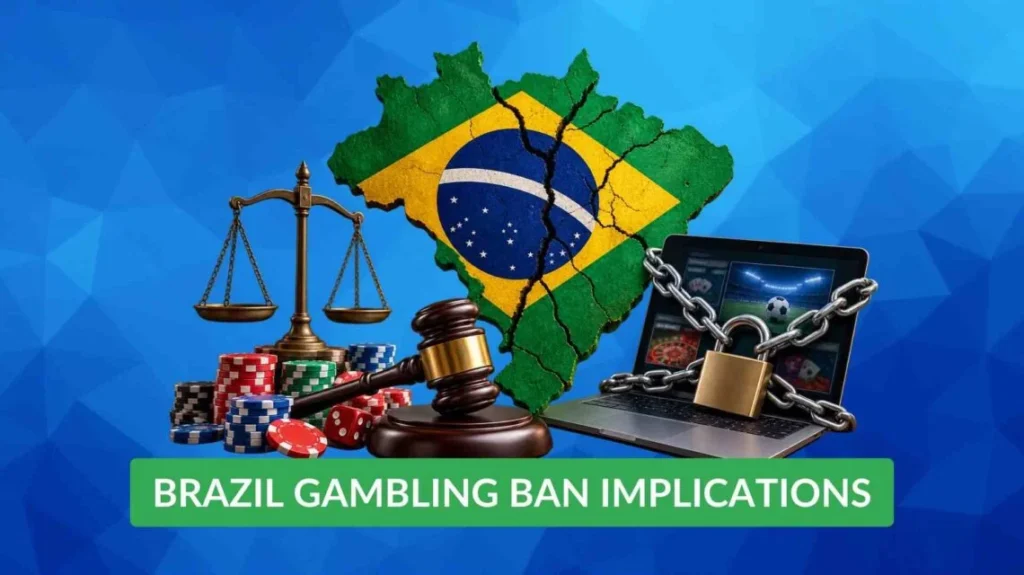
The Latin American gambling landscape has reached an unprecedented regulatory crossroads. On 9 November 2026, leadership within the Federal Senate of Brazil officially designated that pending legislative proposals aiming to severely restrict—and in certain draft versions, completely ban—fixed-odds sports betting and digital casino games will be referred to a unified Joint Committee Review.
This procedural escalation combines multiple high-profile bills (notably proposals amending the seminal Law 14,790/2023) into a centralized committee review. The joint committee brings together key members from the Committee on Constitution, Justice, and Citizenship (CCJ), the Committee on Economic Affairs (CAE), and the Committee on Communication and Technology (CCT).
This legislative consolidation follows mounting social and political debates in Brasília concerning household debt accumulation, sports sponsorship prevalence, and consumer protection protocols. While the Secretariat of Awards and Bets (SPA) under the Ministry of Finance spent two years constructing a transparent, multi-license framework for B2C operators and B2B suppliers, political pressure has triggered a critical re-evaluation of allowed product categories and promotional channels.
This in-depth review breaks down the legislative origin of the proposed betting restrictions, evaluates the legal friction between federal licensing rights and legislative bans, details the technical requirements for operator compliance telemetry, and provides an actionable operational framework for global iGaming enterprises operating across South America.
SECTION 1: Legislative Framework and Statutory Origins of the Review
From Law 14,790 to Legislative Re-consideration
In December 2023, the enactment of Law 14,790 established the legal framework for fixed-odds betting (apostas de quota fixa) and online gaming in Brazil. It established a statutory tax framework of 12% on Gross Gaming Yield (GGY) for operators and 15% on net winnings for players, managed by the Ministry of Finance’s Secretariat of Awards and Bets (SPA).
However, during 2025 and 2026, legislative momentum shifted toward restricting specific digital verticals. A series of bills introduced by senators and deputies sought to amend or repeal core provisions of Law 14,790.
| Legislative Proposal | Primary Author / Committee | Proposed Statutory Scope | Status (As of Nov 2026) |
|---|---|---|---|
| Bill 3,563 / 3,586 Framework | Sen. Damares Alves / Sen. Jorge Kajuru | Sweeping ban on all betting advertising, sports sponsorships, and pre-installed device apps. | Advanced to Joint Senate Review. |
| RNG & Virtual Game Restrictions | Committee on Science & Technology (CCT) | Ban on high-velocity games (RNG slots, crash games, virtual sports). | Integrated into CCJ/CAE joint review. |
| Omnibus Gambling Ban (PT Bills) | Congressional Opposition & PT Coalitions | Complete repeal of Law 14,790 and revocation of commercial authorization. | Referred to Joint Committee for study. |
SECTION 2: Core Areas of Conflict: Fiscal Revenues vs. Advertising & Product Restrictions
Commercial Sponsorships and Sports Marketing Blockades
The primary driver of the joint committee review centers on the visibility of betting brands across Brazilian media, football clubs, and digital channels. The proposed amendments introduce some of the strictest commercial restrictions in global gambling regulation.
| Operational Metric | Standard Law 14,790 Framework | Proposed Joint Committee Amendments |
|---|---|---|
| Sports Sponsorships | Permitted with registered SPA licensed operators. | 24-month phase-out; complete ban on jersey logos. |
| Digital & Broadcast Advertising | Allowed during specific hours with responsible gaming disclaimers. | Absolute ban across television, radio, social media, and digital channels. |
| Product Verticals Allowed | Fixed-odds sports, virtual sports, certified RNG slots. | Exclusion of RNG slots, crash games, and simulated virtual sports. |
| Device Pre-Installation | Standard commercial distribution permitted. | Total prohibition of pre-installed betting apps on hardware. |
Fiscal Implications of Potential Market Reductions
The financial stakes surrounding the joint committee’s review are significant for both the public sector and private enterprises. Federal tax revenues collected under Law 14,790 reached over R$ 11.1 billion during the first nine months of 2026 alone.
Financial Impact Model of Proposed Restrictions
- Standard Multi-License Market: 100+ authorized B2C operators generating regular tax contributions, employment, and technology licensing fees.
- Restricted Market Model (Advertising & Slot Ban): Industry financial models suggest that eliminating digital slot games—which typically generate 60% to 75% of total operator Gross Gaming Yield (GGY)—could reduce total state tax collections by more than 50%. Furthermore, severe restrictions risk driving consumer traffic back toward unverified offshore operators operating outside Brazil’s jurisdiction.
SECTION 3: Technical Telemetry and Player Protection Deficiencies
The Push for Algorithmic Risk Classification
Beyond commercial marketing bans, the joint committee is tasked with evaluating mandatory technical standards for player protection and risk classification. Under proposed amendments, the Ministry of Finance would be required to establish real-time risk scoring for all authorized gaming software.
Proposed Legislative Requirement: Operators must deploy dynamic algorithmic monitoring that classifies games based on spin frequency, return-to-player (RTP) variance, and loss-velocity. Products determined to carry excessive risk profiles—such as micro-stake slots and fast-cycle crash games—must be automatically restricted or disabled for accounts exhibiting signs of financial distress.
| Telemetry Component | Target Operational Requirement | Enforcement Mechanism |
|---|---|---|
| Player Onboarding & E-KYC | Automated CPF Identification & Credit Bureau Check | Real-time blocking of unauthorized tax ID registrations |
| Real-Time Wagering Monitor | Sub-Second Telemetry Logs Sent to SPA Audit Vault | Direct API data streams to government compliance servers |
| Algorithmic Risk Engine | Dynamic Interventions on High Loss-Velocity | Automated loss caps and cooling-off period triggers |
| Dynamic Game Gatekeeping | Selective Suppression of High-Risk RNG Games | Automatic lobby filtering based on player risk scores |
SECTION 4: Software Suppliers and RGS Localization Requirements
Impact on B2B Gaming Aggregators
For global software vendors supplying games across South America, the advancing legislation requires flexible software configurations. Developers must maintain multi-jurisdictional Remote Gaming Servers (RGS) capable of instantly toggling specific game mechanics based on local licensing rules.
To stay competitive in evolving regulatory markets, operators choose platforms that feature top-tier, compliant content. Leading studios offering dynamic content suites, such as Casino Technology games, provide flexible games designed to adapt to local regulatory settings and player protection rules.
Similarly, operators optimizing their game catalogs rely on established titles from major B2B developers. Integrating recognized titles, including WMS slot machines, ensures platforms maintain high performance while adhering to strict technical compliance standards.
| Product / Vertical | Regulatory Vulnerability | Technical Adaptation Strategy |
|---|---|---|
| Fixed-Odds Sportsbook | Low legislative risk; highly protected. | Integrate automated odds-auditing and insider-trading detection. |
| Standard RNG Slots | High legislative risk; potential prohibition. | Configure adjustable RTP and lower spin-frequency settings. |
| Crash & Fast-Cycle Games | Extreme legislative risk; targeted by name. | Implement compulsory cool-down timers and hard loss limits. |
| Live Dealer Tables | Moderate risk; strong regulatory oversight. | Maintain localized Brazilian-Portuguese studios with real-time dealers. |
SECTION 5: Operational Roadmap for LATAM iGaming Compliance
For executive leadership teams, compliance officers, and investors managing digital gambling operations in Brazil and South America, navigating the joint committee review requires a structured, multi-phase risk management strategy.
Operators building compliant player retention frameworks across diverse markets must balance regulatory rules with transparent player incentives. Licensing teams frequently review transparent promotional structures, such as verified no deposit casino bonuses, to ensure promotional terms remain clear and compliant across international jurisdictions.
| Implementation Phase | Strategic Action Focus | Operational Objective |
|---|---|---|
| Phase 1: Legal Portfolio Audit (Weeks 1–3) | Audit current Brazilian operational licenses. | Assess revenue exposure to potential RNG slot restrictions. |
| Phase 2: Marketing Contract Review (Weeks 4–6) | Re-evaluate sponsorship and media deals. | Include regulatory exit clauses in sports sponsorship contracts. |
| Phase 3: Technical RGS Adaptation (Weeks 7–10) | Update PAM and game server settings. | Build dynamic RGS toggles for high-velocity games. |
| Phase 4: Payment Gateway Optimization (Weeks 11–12) | Refine financial processing infrastructure. | Secure compliant payment rails supporting instant user withdrawals. |
To support reliable financial infrastructure and ensure fast payouts for verified accounts, operators integrate secure financial payment networks. Platforms supporting instant digital options, such as PayPal casino withdrawals, help maintain user trust while fulfilling regulatory requirements for secure transaction processing.
SECTION 6: Technical Integration for Multi-Market Operator Portfolios
To protect long-term market access across Latin America, operators must integrate centralized, modular platform architectures. Platforms offering broad catalogs of verified online slot machines need robust Player Account Management (PAM) infrastructure capable of enforcing real-time deposit limits, loss caps, and self-exclusion databases.
Key Platform Compliance Mandates
- Centralized Audit Logging: Direct data API integrations transmitting every wager, win, and account transaction directly to state audit systems.
- Dynamic Geolocation Restrictions: Device-level geolocation systems that block unauthorized connections and enforce state-by-state licensing boundaries.
- Automated Responsible Gaming Alerts: Machine-learning systems that flag rapid loss velocity, prolonged session lengths, and abnormal deposit patterns, initiating mandatory breaks for affected players.
Frequently Asked Questions (FAQ)
What is the current status of the Brazil Betting Ban Bill?
On 9 November 2026, the Brazilian Senate officially referred multiple legislative proposals restricting online betting and sponsorships to a joint committee review combining the CCJ, CAE, and CCT committees for consolidated review.
Could online casino games be banned in Brazil?
Proposed amendments under consideration by the joint committee specifically target high-velocity online gaming products, such as RNG slots, crash games, and simulated virtual sports. Fixed-odds sports betting is expected to remain legal under strict regulatory controls.
How would advertising restrictions impact Brazilian sports clubs?
If approved in its current form, the bill would institute a total ban on betting advertisements and sports sponsorships, requiring existing sponsorship agreements to be phased out within 24 months.
How can iGaming operators maintain compliance during this legislative review?
Operators should audit their product portfolios, insert regulatory exit clauses in marketing contracts, and update their RGS platform technical architecture to support flexible game availability and dynamic risk scoring.
Related Articles
- Malta Intervenes at EU Level to Delay Austrian Gambling Reform Detailed legal and technical analysis of cross-border iGaming disputes, TRIS standstill extensions, and single-market protections.
- German Illegal Online Betting Network Raid: €5.8B Black-Market Operation Dismantled In-depth reporting on multi-jurisdictional law enforcement actions, tax evasion investigations, and illegal payment processing seizures.
- Indonesia Arrests Five Foreign Nationals Over Illegal Online Gambling Operation Comprehensive coverage of regulatory enforcement efforts against unlicensed remote platforms operating across international borders.